
Discover the best ways to earn money online for beginners with freelancing, blogging, affiliate marketing, courses, and eCommerce.
Making money online has become more accessible than ever. Whether you’re
looking for a side income, planning to leave your 9-to-5 job, or simply want to
build an additional revenue stream, there are legitimate opportunities
available for beginners.
The challenge isn’t finding ideas—it’s choosing one that matches your
skills, budget, and long-term goals. Many people jump from one opportunity to
another expecting instant results, only to quit after a few weeks.
The five methods below have consistently helped people build sustainable
online income. Some can generate earnings within weeks, while others require
patience but offer stronger long-term potential.
1. Freelancing

Freelancing remains one of the fastest ways to start earning online because you’re exchanging an existing skill for payment.
If you already know how to write, design graphics, edit videos, build websites, manage social media, or work with AI tools, you can start offering those services immediately.
Best Platforms
- Upwork
- Fiverr
- Freelancer
- Toptal (experienced professionals)
How to Get Started
- Choose one marketable skill instead of offering everything.
- Create 4–6 high-quality portfolio samples.
- Build a professional profile with clear service descriptions.
- Apply consistently to projects every day.
- Focus on collecting positive reviews during your first few jobs.
Realistic Earnings
Experience | Estimated Monthly Income |
Beginner | $100–$800 |
Intermediate | $800–$3,000 |
Experienced | $3,000+ |
Pros
- Low startup cost
- Fastest way to earn online
- Flexible schedule
- Global clients
Cons
- Income depends on client work
- Competition can be high initially
TechCashy Recommendation
Freelancing is one of the best starting points because it generates cash flow quickly. Once your income becomes stable, you can reinvest it into building passive income projects like blogging or affiliate marketing.
2. Affiliate Marketing
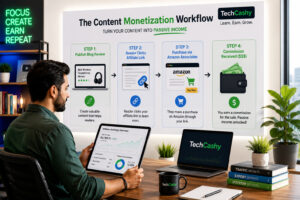
Affiliate marketing allows you to earn commissions by recommending products or services. When someone purchases through your referral link, you receive a commission without handling inventory or customer support.
Popular affiliate networks include:
- Amazon Associates
- CJ Affiliate
- ShareASale
- Impact
- PartnerStack
How It Works
- Join an affiliate program.
- Create useful content.
- Share affiliate links naturally.
- Earn commissions when readers purchase.
Affiliate marketing works best with:
- Blogs
- YouTube channels
- Email newsletters
- Social media communities
Realistic Timeline
Affiliate marketing usually takes 3–12 months before generating consistent income because traffic takes time to build.
Pros
- Passive income potential
- No inventory
- Low operating costs
- Scalable
Cons
- Requires traffic
- Commission rates vary
- Results take time
TechCashy Recommendation
Avoid promoting random products. Focus on tools you’ve personally tested or researched thoroughly. Honest reviews build trust, and trust drives conversions.
3. Blogging & Niche Websites

A blog is a digital asset that can generate income from multiple sources over time.
Instead of chasing viral content, successful bloggers publish helpful articles that continue attracting readers through search engines.
Common Monetization Methods
- Google AdSense
- Affiliate marketing
- Sponsored content
- Digital products
- Online consulting
- Display advertising
Steps to Build a Successful Blog
Choose a Niche
Examples include:
- Technology
- Personal Finance
- Health
- Education
- Travel
- Food
Publish Helpful Content
Answer real questions people search for.
Instead of writing generic articles, create detailed guides, tutorials, comparisons, and product reviews.
Learn Basic SEO
Understanding keyword research, internal linking, page speed, and search intent can significantly improve long-term traffic.
Realistic Expectations
Most new blogs require 6–12 months before generating meaningful search traffic.
Pros
- Long-term asset
- Multiple income streams
- Passive traffic
- Strong brand-building opportunity
Cons
- Slow growth
- Requires consistent publishing
TechCashy Recommendation
If you’re patient and enjoy writing, blogging offers one of the highest long-term returns among online business models.
4. Sell Online Courses & Digital Products

If you possess expertise in a particular subject, packaging that knowledge into digital products can create recurring revenue.
Popular options include:
- Online courses
- eBooks
- Templates
- Notion dashboards
- Excel spreadsheets
- Design assets
Platforms
How to Start
Choose one specific problem to solve.
For example:
- Excel for Beginners
- ChatGPT for Content Writers
- Canva Design Masterclass
- Digital Marketing Basics
Record lessons, prepare downloadable resources, and publish your course.
Realistic Earnings
Digital products often take weeks or months to gain traction, but once established, they can continue generating sales with relatively little maintenance.
Pros
- High profit margins
- Scalable
- Global audience
- Passive income potential
Cons
- Initial creation requires effort
- Marketing is essential
TechCashy Recommendation
Create one excellent product instead of multiple average ones. Quality and positive reviews often outperform a large catalog.
5. Start a Dropshipping or eCommerce Business

Dropshipping allows you to sell products without managing inventory. Orders are fulfilled directly by suppliers after customers purchase from your online store.
Popular Platforms
- Shopify
- WooCommerce
- BigCommerce
Finding Suppliers
Reliable supplier platforms include:
- AliExpress
- Spocket
- CJ Dropshipping
Steps to Launch
- Choose a niche.
- Research demand.
- Build your online store.
- Add products.
- Set up payment methods.
- Drive traffic through SEO, content marketing, or paid advertising.
Realistic Profit Margins
Many beginner stores operate with 10%–30% profit margins, though results vary depending on product selection, advertising costs, and competition.
Pros
- No warehouse required
- Global customer base
- Scalable business model
Cons
- Customer service responsibilities
- Advertising costs
- Supplier reliability matters
TechCashy Recommendation
Treat dropshipping like a real business rather than a quick-money opportunity. Building a recognizable brand often leads to better long-term results than selling generic products.
Quick Summary Table
Method | Difficulty | Startup Cost | Income Speed | Long-Term Potential |
Freelancing | Easy | Low | Fast | Medium |
Affiliate Marketing | Medium | Low | Slow | High |
Blogging | Medium | Low | Slow | Very High |
Online Courses | Medium | Low | Medium | High |
Dropshipping | Medium | Medium | Medium | High |
TechCashy Verdict
If you’re starting from scratch, here’s the path we recommend:
- Freelancing – Generate your first online income and build practical experience.
- Blogging – Create a long-term asset that attracts organic traffic.
- Affiliate Marketing – Monetize that traffic with relevant products.
- Digital Products – Package your expertise into courses or templates.
- eCommerce – Expand into selling physical products if it aligns with your goals.
This combination balances short-term earnings with long-term business growth.
Final Thoughts
There isn’t a single “best” way to earn money online. The right choice depends on your skills, available time, and willingness to learn.
Freelancing can produce income quickly, while blogging and affiliate marketing reward consistency over time. Digital products and eCommerce can further diversify your revenue as your audience grows.
Rather than trying all five methods at once, choose one, commit to it for several months, and track your progress. Small, consistent improvements often lead to stronger long-term results than constantly switching between new opportunities.